
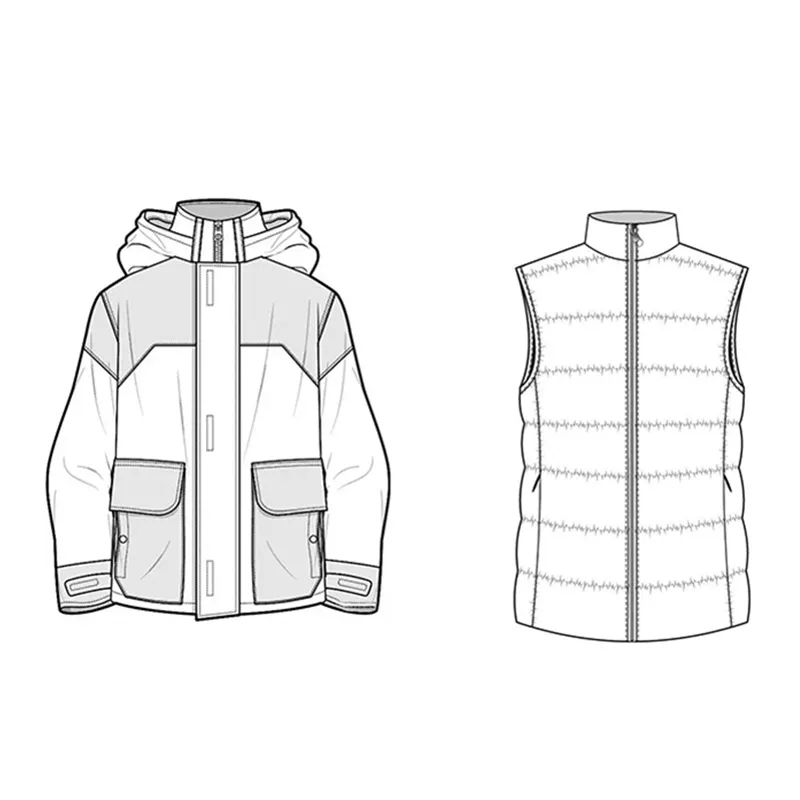
1. Designing Your Heated Apparel
Almost any type of apparel can be turned into a heated version at QYHeating, including suits, sweatshirts, yoga pants, overalls, down jackets, cycling outfits, workwear, base layers, and more. For each style, we offer tailored heating solutions. All you need to do is share the design or style you have in mind, and we will provide the right heating solution for it.
For customers without a clear design vision, we offer over 100 different heated clothing designs for inspiration. We also provide suggestions on design details like pockets, zippers, collars, and more.


2. Choosing Heating Zones and Switch Control
Heating Element Placement: The placement of heating elements is critical for comfort and performance. For jackets and vests, the core heating areas are typically the back, abdomen, and neck. Usually, at least three heating pads are required (e.g., one on each side of the abdomen and one on the back). With our experience working with various brands worldwide, we can recommend the best placement and customize the heating zones to ensure comfort and flexibility, without restricting movement.
Switch Control Options: There are different control types: single control, dual control, and multi-control. A single control switch operates all heating areas simultaneously, making it simple and practical. Many brands choose to incorporate their logo on the switch. Dual and multi-control options allow for separate control of different heating areas, such as the abdomen and back. The switch location can typically be placed on the chest, hem, or inner lining of the garment, based on your preference. We can customize the control system and its location to meet your needs.


3. Choosing Heating Performance and Voltage
The voltage of the heating system directly affects the warmth and battery life of the garment. Popular temperature settings are low, medium, and high. For example, a 7.4V system typically provides temperatures of 100/113/131
°F (37/45/55°C) and can operate for 3–10 hours, depending on the selected temperature setting and the battery capacity (e.g., a 5000mAh battery).
Voltage Options:
5V: Cost-effective and compatible with standard power banks, ideal for everyday use. However, it has slower heating times and lower temperatures, not suitable for extreme cold.
7.4V: Faster heating and higher temperatures, ideal for most winter activities. It’s the preferred choice for most brands. The downside is that it requires a dedicated 7.4V power bank.
12V: Offers even higher heating speeds and temperatures, often used for extreme cold weather like motorcycle gear and mountaineering jackets. The downside is that it’s not compatible with regular power banks, and the larger batteries are heavier and more expensive.
We can customize heated apparel in 5V, 7.4V, or 12V and will provide solutions based on your specific needs.
The material of the heating pads plays a significant role in the efficiency, durability, and comfort of the heated clothing. The most commonly used materials for heating pads in apparel are composite fibers and carbon fibers. Some brands also use graphene or nano-carbon.
4. Choosing Heating Pad for Clothing Materials

Carbon Fiber
Lightweight, flexible, and energy-efficient, carbon fiber is ideal for most applications. However, it can break under excessive strain. At QYHeating, we’ve perfected the sewing and distribution design to prevent this issue.

Composite Fiber
More durable against bending and wear, but the wires are thicker, which may reduce comfort if used for base layers or tight-fitting garments.

Graphene
Offers excellent conductivity and is thinner, but less durable, with a shorter lifespan and higher cost. It’s more commonly used in other heating products rather than apparel.

Nano-Carbon
Provides even heat distribution and is energy-efficient, which helps extend battery life. However, it is less suitable for products subjected to heavy movement and friction.
Conclusion
Customizing heated clothing begins with selecting the right apparel style to match the intended use case. By combining your design vision with our professional expertise, we can collaborate on decisions regarding heating zones, switch design, heating pad materials, and voltage. This ensures the creation of a product that meets your customer’s needs and stands out in a competitive market.
As a heating clothing manufacturing solution service provider with many years of experience, we are confident that we can provide you with one-stop service. QYHeating looks forward to cooperating with you!

